
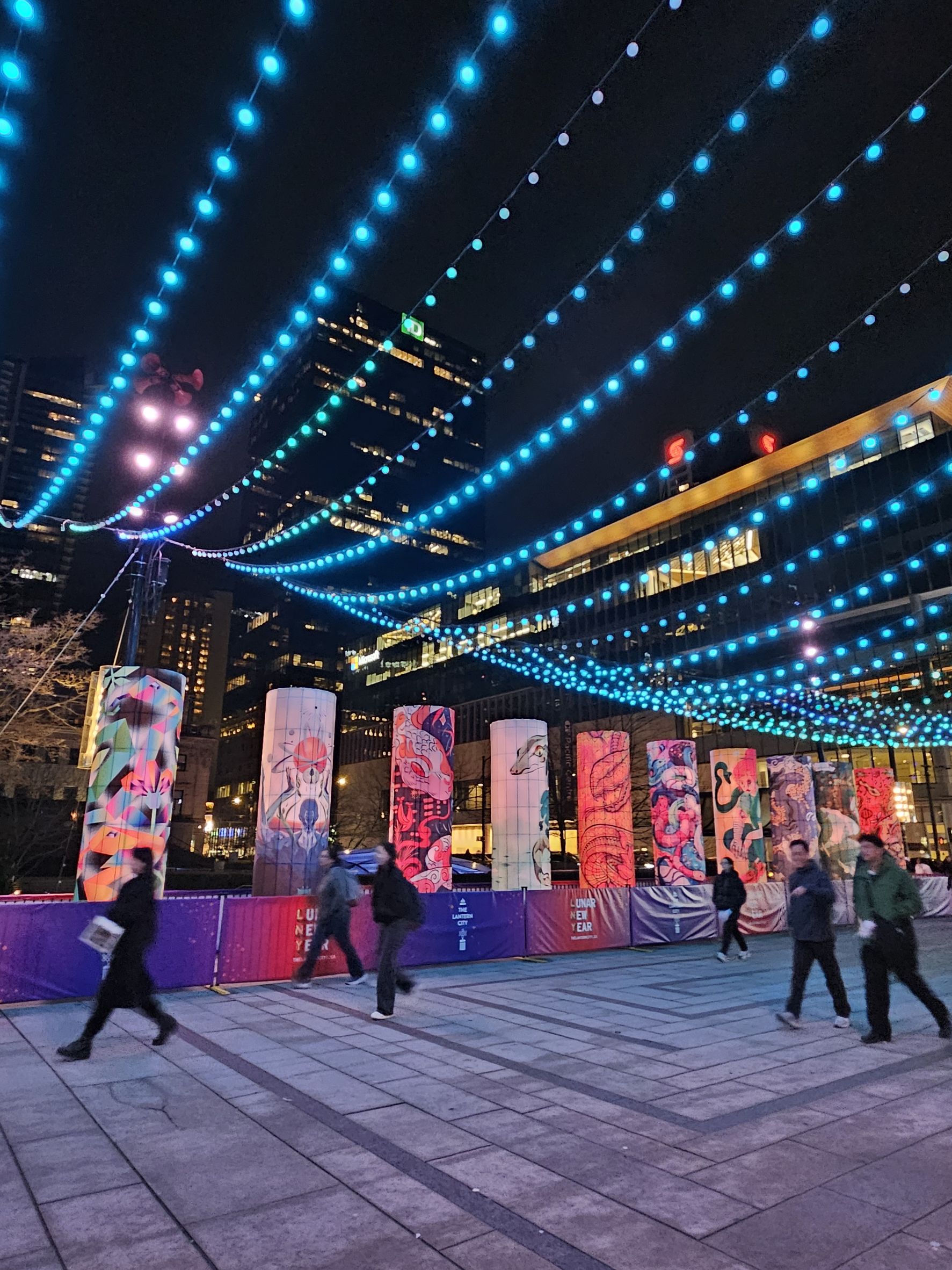
Explore and Win: The Strathcona Cafe Crawl
This July, we’re celebrating Strathcona’s vibrant café culture with a neighbourhood-wide cafe crawl and contest that showcases the range of third-spaces in Strathcona, and rewards the people who champion our local economy. From July 7th–30th, 2026, visit participating cafés throughout Strathcona, enjoy your regular or discover something new, and enter for a chance to win a $100 gift card from the cafés you visit.
Participating Cafés
- Rumor Cafe
- Eden Cafe
- Pallet Coffee
- Prototype Coffee
- Railtown Cafe
- Tommy’s Wholegrain Bakery
- Rise Up Marketplace
- Doe Coffee
- HAVE Cafe
- Peace and Culture Coffee
- The Garden Strathcona
How It Works
- When you visit a participating Strathcona café, write your contact information (name & email address/phone number) on the back of your receipt.
- Drop your receipt into the contest box located inside the café. Your entry will be eligible for that café’s $100 gift card draw.
To enter without making a purchase, email contest@strathconabia.com during the Contest Period with:
- Your full name
- Email address
- Telephone number
- The participating cafe’s draw you’d like to enter
- A 50-word essay describing how you’d spend a day in Strathcona.
Eligible no-purchase entrants should indicate which participating café they wish to enter and will receive one (1) entry into that café’s prize draw.
At the end of the campaign, one entrant will be randomly selected from each participating café’s entries to receive a $100 gift card to that café. So whether you’re kick-starting your day, meeting a friend for lunch, or picking up something on your way home, your visit is another opportunity to win while supporting Strathcona’s café cluster.
Contest Rules
- Contest period: July 7, 2026 at 12:00 AM PST to July 30, 2026 at 11:59 PM PST.
- This contest is open to BC residents, age 19 and above, excluding café and Strathcona BIA staff.
- Any qualifying purchase transaction at a participating café is eligible. There is no minimum purchase value.
- Participating cafés are limited to Strathcona cafés that have the contest box. For cafés with multiple locations, only the Strathcona location with the contest box is regarded as a participating café.
- Only one (1) entry is permitted per purchase transaction. Multiple entries are permitted, provided each entry is supported by a separate qualifying purchase transaction.
- Entries must include a legible/valid name and contact information (phone number/email address).
- For no-purchase entries, entrants must write a 50-word essay on the topic “How I’d Spend a Day in Strathcona”.
- One winner will be selected from each participating café.
- A total of 11 prizes are available to be won. Each prize consists of a $100 gift card.
- A single $100 gift card will be won at each participating café. (approximate retail value: $100 CAD).
- Each winner will receive one (1) $100 gift card to the participating café from which their entry was selected.
- Random draw will occur on or around Thursday August 6, 2026
- Prizes will be awarded by the Strathcona BIA.
- The odds of winning depend on the number of eligible entries received.
- Before being declared the winner, the selected entrant must correctly answer a time-limited mathematical skill-testing question administered by the Strathcona BIA.
- Selected entrants will be contacted within 5 business days following the random draw.
- Personal information is collected solely for administering the contest.
- The Strathcona BIA reserves the right to select another entrant if no response is received after five days.
- The Strathcona BIA reserves the right to modify or cancel the contest if necessary.
Ready to win? Start exploring cafes and start submitting those entries. Your next favourite spot awaits.

Meet the Maker: Asian-Canadian Special Events Association
Come curious. Leave learned.
Asian-Canadian Special Events Association. One might simply be attending one of their major festivals for good eats and great music, but Managing Director Charlie Wu’s goal is that you leave with more understanding of Taiwanese and Asian culture. In this interview, he tells us about how it all started, why culture is more than just food and performances, and how curiosity can be a powerful tool for moving from multiculturalism to interculturalism. Please enjoy our conversation and visit the website to see the schedule for TAIWANfest happening from August 30 – September 1.
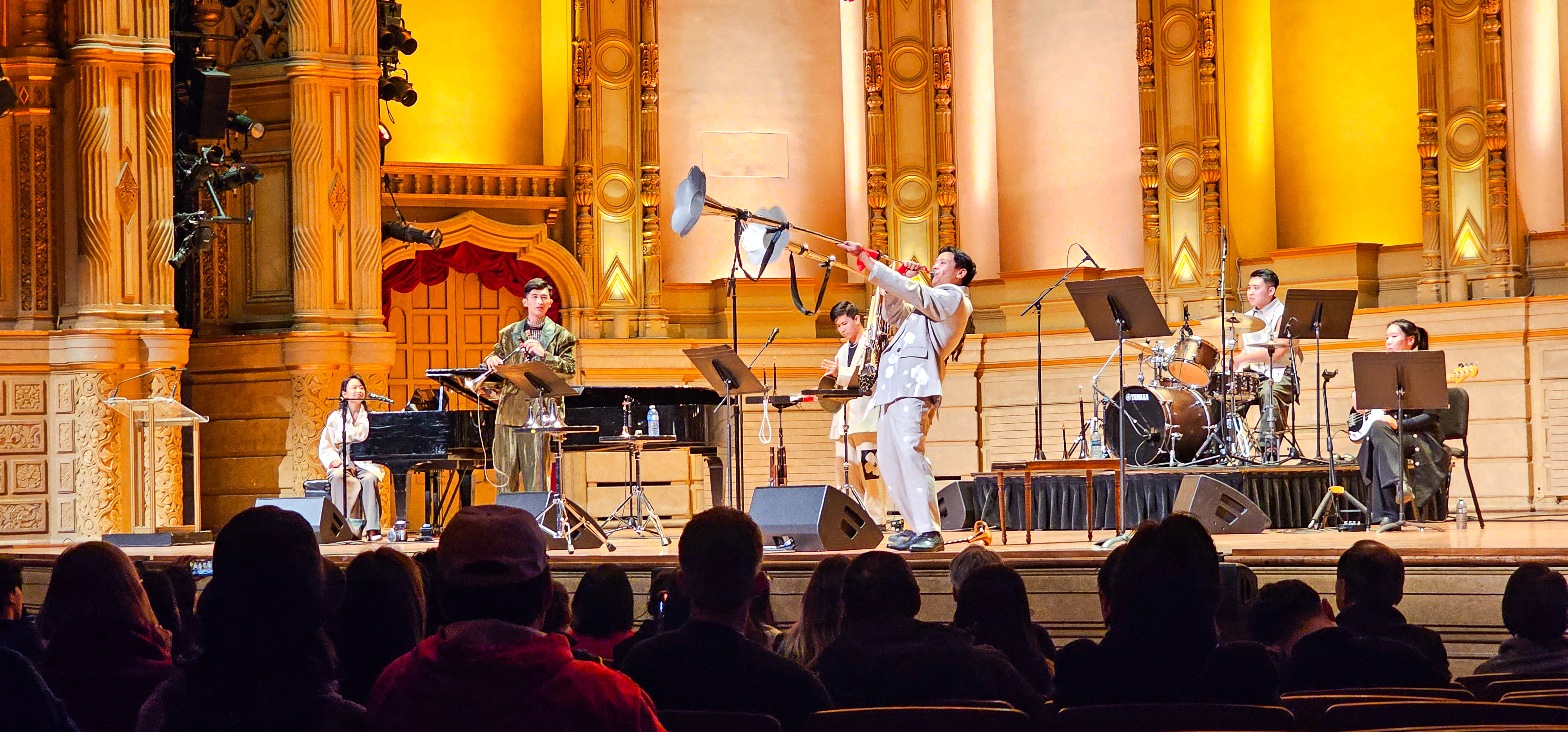
Please tell us about your organization.
I’m the Managing Director for the Asian-Canadian Special Events Association. That’s the organization that took over TAIWANfest back in 2009. Prior to that, the festival was called Taiwanese Cultural Festival and was organized by another charity, the Taiwanese Canadian Cultural Society. I was part of that organization, but because the festival expanded, we had to form another organization to oversee it. Then we expanded in 2010 as the Cultural Olympiad was looking for a partner in organizing events for Asian communities, and we were brought in to create our second event, LunarFest, a legacy event from the Cultural Olympiad in 2010. We’ve put on LunarFest over the years, and it’s still a flagship festival in the wintertime. I also lead another organization called The Society of We Are Canadians Too, which was founded after Canada celebrated its 150th anniversary. We felt that there was a need to focus beyond the Asian community, so The Society of We Are Canadians Too was established to speak to this concept of interculturalism especially from the newcomers and the first-generation perspective. With this organization, we organize the Jade Music Fest. It was created to elevate Chinese language music in Canada. Now we’ve sort of evolved to include more languages. In the past, most of our music festivals were primarily dominated by English or French artists and we didn’t have a lot of opportunities for people with different backgrounds to include their mother tongue into their work. Right now, we’re not seeing linguistic diversity within the music industry, and it isn’t just me saying this. The Canadian Live Music Association reports that there’s an under-representation of racially marginalized communities in the music industry. The Jade Music Festival is our answer to that. So we have these three festivals that we host on an annual basis, but we also build partnerships throughout. For example, we work with Vancouver International Film Festival, Vancouver International Children Festival, Vancouver Public Library, Museum of Vancouver, and the Dutch Cultural Association of BC. These are some of the partnerships that we coordinate programs with. In Strathcona, we work with the Eastside Arts Society and being here now, we’re trying to be part of the arts community as well.
Tell us about the move to Strathcona
We used to be in the South Marine area, and we didn’t see ourselves as a good fit, especially with our neighbours being businesses that didn’t know what we did. Since we hold our events in Downtown Vancouver and we have a lot of partners living and working in the Strathcona area, we thought it was time that we finally belonged to the arts community. It’s something we’ve been looking forward to, as our footprints are quite often in the East side.

Why is connecting people to culture important to you?
Being from Taiwan, I have always embraced the concept of diversity. Taiwan has Indigenous populations like Canada, and there are newcomers, say people from Southeast Asia and all over living in Taiwan. However, there’s a certain narrative that perhaps comes from past colonization and political situations. People didn’t know how Taiwanese people wanted to identify and thought they were just one group. I’ve seen that here in Canada as well, where people speak of Taiwanese people in a certain way, and I have to explain that we also have Indigenous populations, just like Canada, that aren’t Taiwanese or Chinese, that sort of thing. So that concept of diversity and allowing people to be who they are and have their own way of identifying themselves, it’s very important here in Canada. Sometimes we see cultures being presented in a very stereotypical and superficial way, reduced to the food that we eat, the outfits or the music, and this becomes attached to our identity, but it’s much more complicated. In Canada, we’re so lucky to be surrounded by different cultures and we wanted to make sure there’s an opportunity for everyone to be curious and realize that there’s more than the food. The curiosity factor is something that we want our events to address. When people come for the food, they just want to eat. That’s hunger, not curiosity. Curiosity says “Hey, I’m waiting for you to tell me something that I don’t know” because when people walk away from an event learning something new, that’s something that’s going to affect their lives.
Where do you get your inspiration from?
I love watching sports because of my upbringing. So I get a lot of inspiration from competition and teamwork. I’m inspired by people that work hard and try to be good at something, and this applies to everybody. It applies to artists, creatives and everyday people, because the success that we have is because of the people that we work with. I don’t do this myself, I have people that support the vision, and partners that I don’t always agree with, but we sit down and try to work together. I see a lot of sports analogies in my work. I need help from people, partners and institutions. I need people to be willing to listen to my stories, and I see this best represented in sports.

Beyond ticket sales and attendance, what does a successful event look like?
We used to be so focused on building attendance, setting ticket prices and such, sometimes because of commercial sponsorship that wanted us to do certain things, and that created a false perception about our events. Since we moved our events downtown, that’s never an issue anymore. We don’t have to worry about attendance because there are a lot of people on site. But it allows us to learn more about everybody else. Downtown Vancouver is not a neighbourhood that we are in all the time, so we’re mindful of the experiences of the people who work and live there, making sure that we’re not intruders. We want to be positive rather than a disturbance. We want to be that plus factor rather than the minus factor. Now over the years with these intercultural dialogues that we’ve created, people tell us that they didn’t know about their connection to Taiwanese culture. I tell this funny story of when we had the dialogue with the Dutch community. They set up a market as part of TAIWANfest, and it’d never been seen before. But there’s a historical connection, because the Dutch colonized Taiwan for over 30 years. So we reconnected because of this relationship. I remember overhearing two European-looking people ask “Why are we here?” And one person told the other “Hey, we used to colonize Taiwan”. So I think that’s the curiosity aspect, making people ask questions and dive into conversations, rather than, “Hey, this food tastes great” and that’s the end of it.
What’s been the most challenging moment in your journey so far and what did it teach you?
For me it’s presenting new aspects of culture to the community and they go, ” I don’t recognize this as Taiwanese culture.” That’s not because they’re not Taiwanese, but that even for them, there’s a part of discovery or exploration that they need to do. So presenting to a Taiwanese community, sometimes that’s a hurdle. Some people don’t recognize it and so don’t see it as a part of them, but as we’ve grown, people now expect to attend TAIWANfest and learn a bit of the past that they didn’t know, and learn about other cultures that are connected to theirs. It took a bit of time before we built this reputation, but in the beginning, it was very hard.
What does the future of your organization and Asian-Canadian expression in Vancouver look like to you?
As much as our organization is Asian-Canadian and we do a lot of events from this perspective, I see it as a starting point to help our community to learn more about ourselves. Ultimately, I think we all need to have a new perspective of what an intercultural Canada could look like. We all recognize our differences and we share our citizenship as Canadians, but that doesn’t mean that we have to give up our cultural heritage. In my ultimate vision of the future, all cultures are regarded as mainstream, and I think Canada has a great opportunity to do just that. The multicultural policies were a good starting point, but now we have to move towards interculturalism.

Meet the Maker: Retro Modern Designs
Designer Pieces. Real-life Prices.
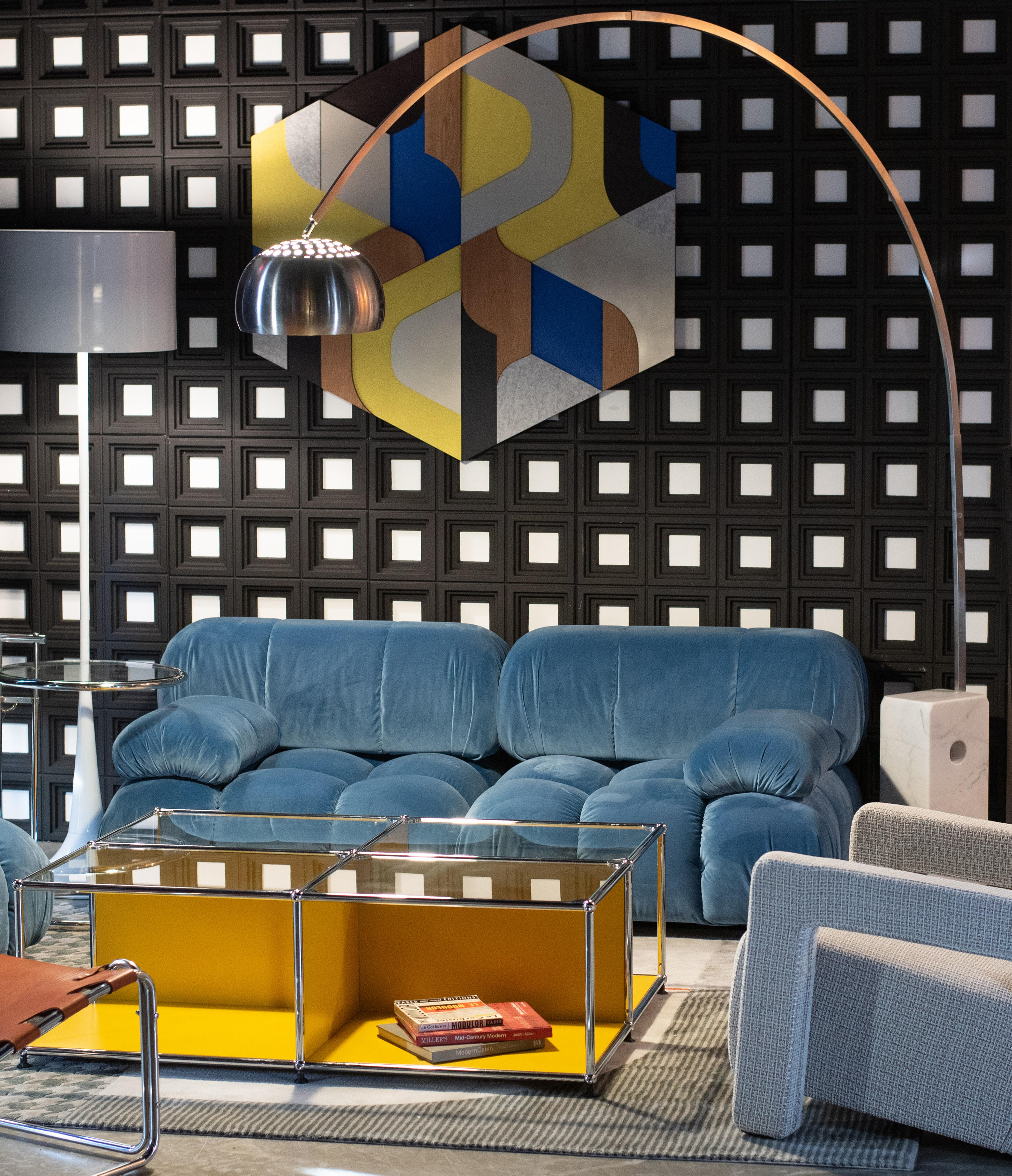
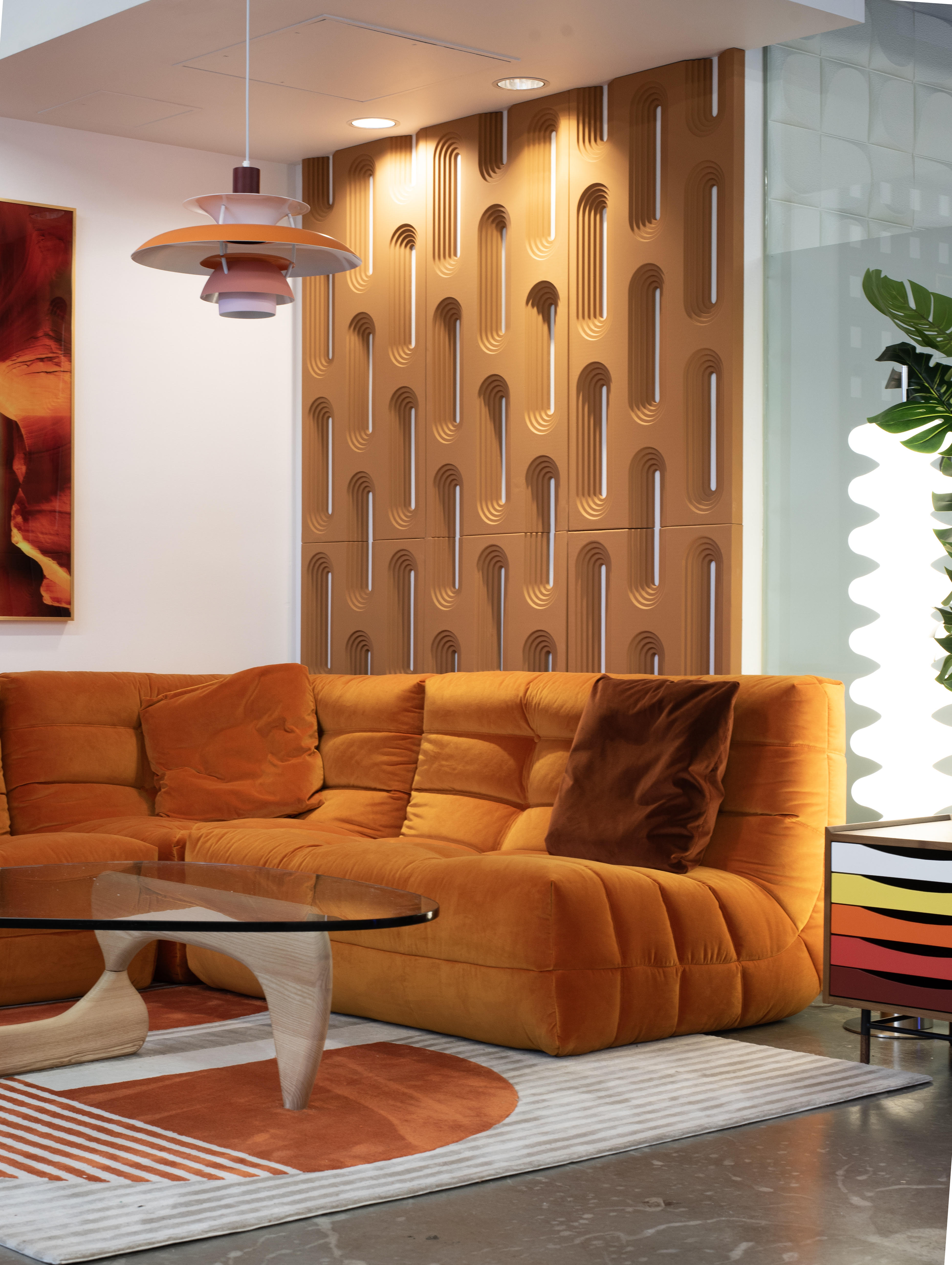
Retro Modern Designs. They say to never put a price tag on your passion, but when that passion is re-imagining iconic furniture designs for modern living, does it even matter what they say? Discussing the combination of a love for designer things, a side hustle, and a pandemic lock down, Jeff tells us his story. Enjoy.
What’s the story behind Retro Modern Designs?
So it started off as a passion project to make pieces for myself. I had a passion for designer things and wanted to furnish my home in a way that would be affordable. I also wanted to add my personal touch and be involved in the process of bringing things to life. This passion that started in 2019 grew into a business when COVID hit, because it created a huge demand for furniture as a lot of people were staying home, shopping for furniture because they weren’t spending money elsewhere. So it was a unique situation as my job at the time got affected by COVID, and then this side hustle turned into a company, and it just grew from there.
What do you think has fueled the growth of your business?
One would be my passion for it, but it has also primarily been the customers; their passion and enthusiasm for the brand. People are always asking me if I can make them something or the other, and it’s just been this fun thing that’s snowballed into what it is today. It makes it not feel like a job so much. It’s like a fun passion.
Have you always been in furniture design?
I’ve always been interested in design, not just furniture. My father was a fashion designer, and I always liked nice designer things, often things that I couldn’t afford, but enjoyed looking at. Now creating this company has enabled me to make these nice things available and affordable, not just to myself, but to my customers, because I’ve structured my business in a way that allows me to offer high quality furniture at a lower price.
How did Retro Modern Designs come to be in Strathcona?
I was actually living in Pemberton, and after the growth that the company had, I was commuting too frequently. So I relocated from Pemberton to the city. After opening the first store in Richmond, I realized that the majority of my customers were coming from Vancouver. So I began looking for a location that was close to the city, but without the high rent. Strathcona seemed perfectly suited as it’s a direct path into the city, so it would be easily accessible by customers. Also I had noticed that there was revitalization happening one block over, and it seemed like I was getting into the neighbourhood at the right time. And so far, it’s been going well. It’s been collaborative and the neighbourhood is great.
What’s the most pressing issue that you face being in Strathcona?
It’s not a pressing issue, but sometimes people have set up camp right outside. I do keep the door locked, which I wouldn’t like to, but there have been a few people that have just wandered in and sometimes, they don’t want to leave. But it’s getting better and I’m optimistic that it will continue to get better.
Do you feel like you’re a part of the ecosystem here?
I do, absolutely. There are other furniture stores in the neighbourhood. There are artists next door. I also collaborate with the photographers next door. I collaborate with Gallery 881 down the street and I’m also working with the artists that are on the wall. They’re in this neighbourhood as well.

What’s on the horizon for Retro Modern Designs?
I just returned from a trip overseas with a bunch of new samples of some very cool fabrics. So I’ll be launching some new original designs, new exciting materials and new product lines. It’s always evolving and so long as customers keep coming, I’ll keep evolving. That’s what I like about it, that year after year, it’s something different. So yes, some exciting new designs are on the way.
What would you say are the most pressing challenges that you face running your business?
Well, cash flow is a big deal. Maintaining a warehouse full of inventory and wanting to add new products, it’s all very cash flow demanding, which is challenging when you face economic times where customer spending is down and inflation is up. However, in good times, it’s great.
What can you say about the economic potential of Strathcona?
Well, I like the direction we’re headed, along the lines of the arts and design and I think if we had a few more key retail businesses open up to drive more traffic, this block could become a great block. I think we need to clean up the streets a little bit more. There’s lots of potential and I’m looking forward to seeing new businesses open up. Other furniture stores opened up after I was here so there is a trend showing. I’m looking forward to more retail on this block, and right now, it’s more of studios. I think it’s a great strip because we have good parking and we have really good walking infrastructure, so it’s only a matter of time.
Any issues that face the furniture & design industry as a whole?
There’s always challenges with shipping containers for freight. where the prices sometimes soar and it just affects the overall cost of things. Thankfully, I haven’t had supply chain issues, just the cost of goods. Now with the government adding new tariffs, it does make it more difficult to make a profit. Also, there have been quite a lot of new furniture stores coming on the market since I started six years ago and sometimes, competition is cause for concern as you often find cheaper things online, but I stay in my lane, and just try to be original and do unique things.
Do you feel like shifting design trends over the last few years have impacted your business?
My tagline for my business is “furniture that’s always in style”, and I chose that because the majority of the pieces that I sell are inspired by pieces that have been around for the past hundred years and they’re still in style. So I believe that good design never goes out of style. So, although some stores might sell things that are in one year or out the next and are always forced to change their product line. I feel that my collection doesn’t need to change because it’s tried and tested and proven because good design never goes out of style.
What do you think is the most urgent issue facing Strathcona right now?
I’d say the vacancy rates. When I look around, I see what appears to be a lot of vacant buildings, not just in Strathcona, but all over the city. Perhaps it’s investors sitting on their properties. I think that the city needs to start putting stricter mandates on how people hold properties and they shouldn’t be allowed to sit on vacant property and not do anything with it because there’s such a demand. The high vacancy rate creates an environment where it makes the neighbourhood seem unappealing, and also promotes encampments. I would like to see a lot of the empty buildings resurrected and renovated with signs that say open for lease because that’s going to attract businesses to the neighbourhood.

Meet the Maker: STF Home and Furniture
New to the neighbourhood, not to the game.
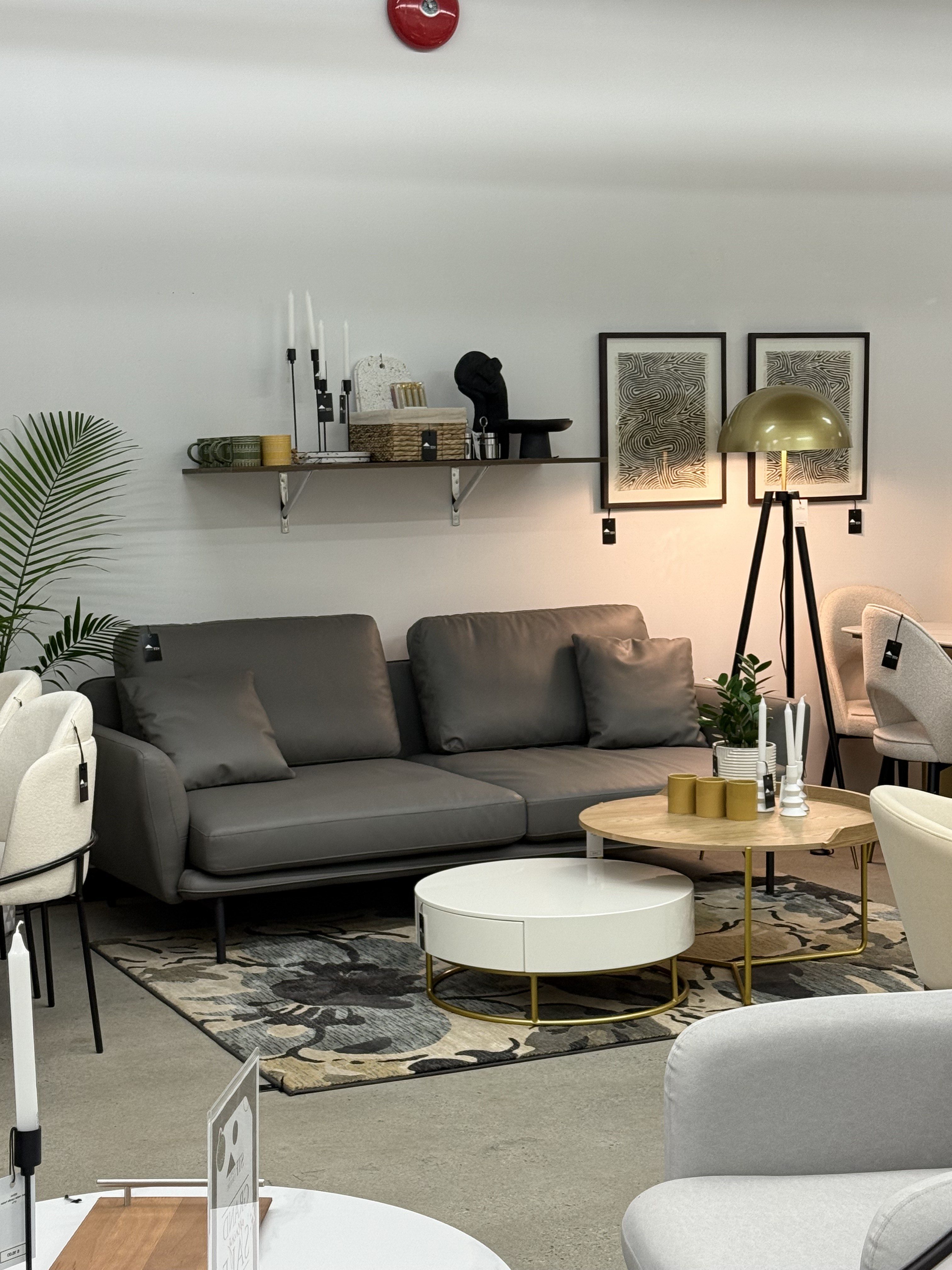
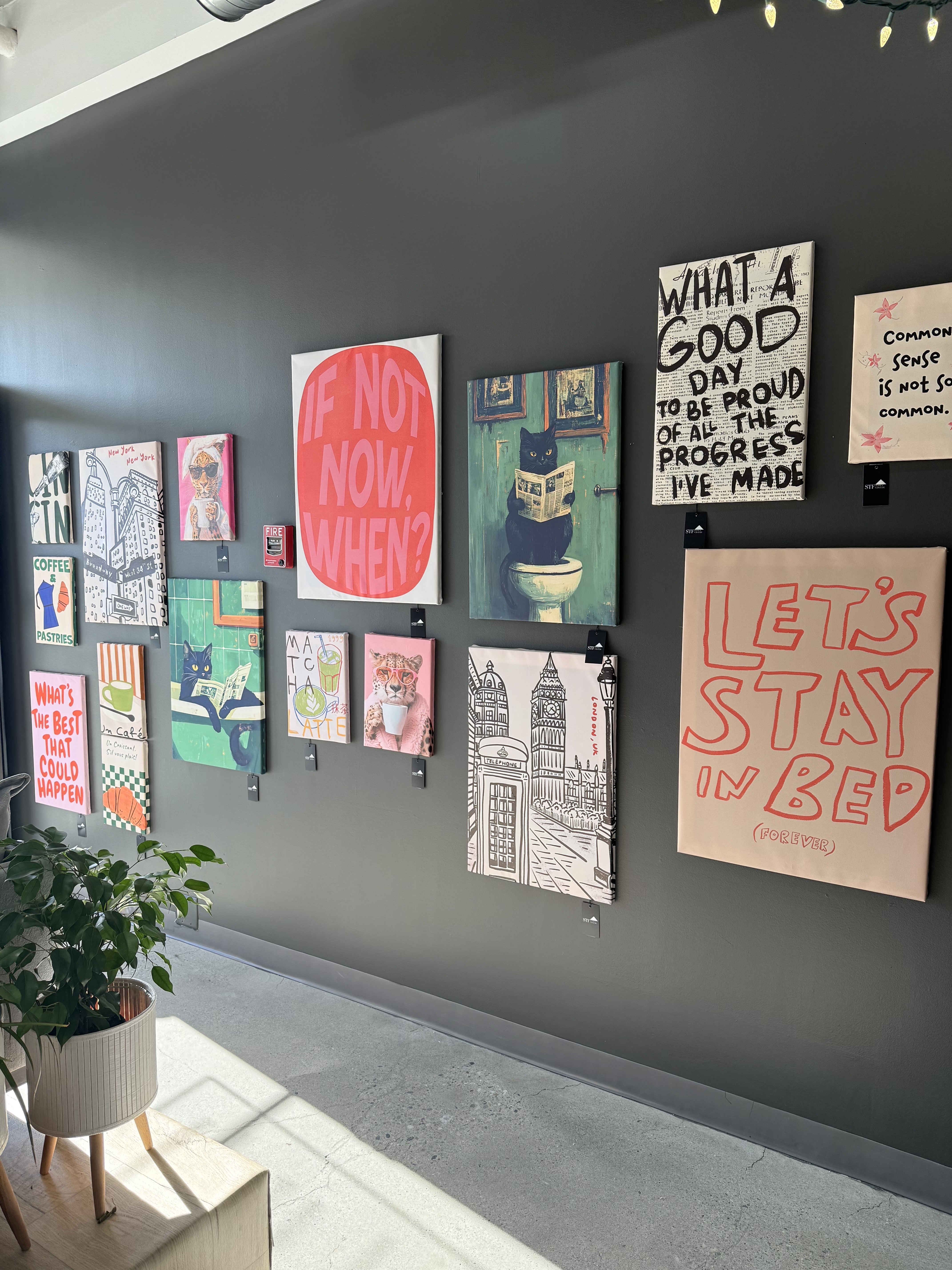
STF Home & Furniture. Trends come and go (looking at you, TikTok), but great style is forever. These are words to live by for Estefania and her team at STF Home & Furniture. From designing custom furniture pieces to stocking decor must-haves, she’s driven by the joy her clients get from seeing their space come together. Please enjoy our conversation.
How did STF Home & Furniture come to be?
My background is in interior design, and so I am passionate about furniture, home decor, and all things interior design. 15 years ago, I set a personal goal of owning a furniture store and it seemed like a very big dream. About two years ago, we launched the online store, and eventually we had a lot of our customers requesting a showroom for that physical shopping experience and that’s when we decided to open the showroom.
What was it about our neighbourhood that made you choose to set up the showroom here?
The first things that I noticed and fell in love with were all the colourful walls and murals. I’m originally from Mexico, and our life is full of colours. It’s something that I miss, and when I saw all the colours in Strathcona, as well as the friendly environment, it made me feel like I was home.
What’s the best part of running an interior design business and showroom?
The best part for me is to be a part of my clients’ lives. I get to know their spaces, their homes. I also get to see their smiles and feel their excitement when they receive a new piece of furniture, whether it’s a sofa or dining table. Just to be able to be a part of that moment for me, that’s the best part.
Having been in Strathcona for 3 months, what are your thoughts on the neighbourhood?
I like our neighbourhood a lot. The people around and the neighbours are very kind and friendly. I’ve loved meeting all the people who have come in to introduce themselves. I also like that we are around a lot of creatives. We feel so grateful to be here.

What’s your big dream for STF Home in the future?
I imagine STF Home having showrooms all across Canada. We have a huge client base on the other side of the country, specifically Toronto and Montreal, and we are focusing our planning on opening a showroom out there in the coming year. We’d also love to expand to Alberta as well and we’ll see what happens. What I do know is that we have the power to create something bigger and that’s the goal for us.
In your opinion, what pertinent issues is the interior design industry at large facing at the moment?
I think the cost of storage and shipping. It’s difficult to keep the inventory, because a lot of the time we’re dealing with large items. So we’d need a huge warehouse to store all the items in stock. It can also be expensive to make the shipments of these oversize items, because you’d typically need a pallet and secure packaging. It gets expensive. Another thing I’ve noticed is the constantly changing trends. Unlike in the past where design trends changed slowly over time, now because of social media, certain styles and items are in and out of trend very quickly. Some clients want everything, but we have to also explain that it’s a process that takes time. However we do carry some pieces that can be considered trendy.
What would you like to see from the Strathcona Business Improvement Association?
It would be amazing if we could create a collaborative event with other businesses in the neighbourhood. We are more than happy to host something like that here in the showroom. We’re imagining an event where business owners can network, refer each other and grow.

Meet the Maker: HAVE Culinary Training Society
Step in for a hot meal or a new direction.
HAVE Culinary Training Society. Beyond offering support to people seeking tangible resources like training, employment and housing, they also offer the intangible like confidence, pride in work and a supportive environment. My conversation with Melissa Desousa, Operations Manager at HAVE Culinary, reveals a purpose and passion for Strathcona.
What’s the story behind HAVE Culinary Training Society?
HAVE Cafe was started by Amber Anderson and a few other people. She used to work with Cook Studios teaching at-risk youth culinary skills. When she heard that it was closing, she, being very passionate about offering those training opportunities to people at risk and with barriers, decided to start HAVE Culinary. Instead of just aiming it towards youth, she opened it to people with barriers to employment, looking to gain culinary skills, wanting to get into the industry or simply wanting to learn how to cook. These people can all access our program.
Any high points of running HAVE Culinary in Strathcona?
One is that a lot of the people that access our programs live within this neighbourhood. Some people have come into our cafe, gotten coffees, lattes or even food that the students have prepared, and that’s how they learn about our program, and they come back and enroll in the program themselves. Another high point is that being both industrial and residential, we have corporations, non-profits and community organizations that work within Strathcona come to our café, learn about our program and then it helps us build those relationships to be able to help our people find employment and housing afterwards.
Do you feel like you’re a part of the Strathcona ecosystem here?
Absolutely! We’ve been here since 2007 and so we have really deep roots in the area. We have operated out of this facility the entire time. So, we’ve been able to build those relationships and work closely with other organizations in this area like Mission Possible and Embers. We had a Peer program where we partnered with Embers, Raise the Rates, Aboriginal Front Door and more, so it’s been a great ecosystem to be a part of.
What’s the most pressing issue you face being in the Strathcona area?
Theft has been a really big problem. When I first started here, we had multiple laptops stolen including our accountant’s laptop, and boxed dinners stolen. One time, Shift Delivery had their entire trike full of probably 200 meals to be delivered, and the whole trike got stolen. We definitely do our best to accommodate and pivot, but that does seem to be the most prevalent struggle that we face being in the area. But I don’t think it’s just Strathcona, I think it’s all over the place.
What’s your vision for the future of HAVE Culinary in Strathcona?
We would love to be able to access more of the non-profit housing providers in the community. We’re partnered with Lookout Housing Society, MPA Society, and Options. We’ve had partnerships with community builders in the past as well. I know that there’s more low-income housing coming here and we would love to have the opportunity to not only provide meals for those residences, but also provide the training for the people that live there, and help them gain workplace skills, life place skills, and confidence in themselves. Cooking isn’t just a means of a career. It’s something that you can carry with you the rest of your life and we would love to be able to continue to provide that.
What do you think is the most urgent issue facing Strathcona?
Parking! It is such a struggle sometimes. Even though the rate to pay is extremely reasonable, trying to find a spot, especially during peak hours, is just hard. It would be great if we had a parking structure. I don’t know where it would go or how to get that done, but something here for the businesses and community organizations so we’re not driving around endlessly looking for street parking.
What would you like to see from the Strathcona BIA?
More meet and greets! I love being able to meet other people that are involved with the BIA and I know that there were a couple held last year, but I think having more engagement with the other members would be really beneficial for us as a community.

Meet the Maker: Creative Others Collective Inc.
With the word Creative in the name, you already know what to expect.
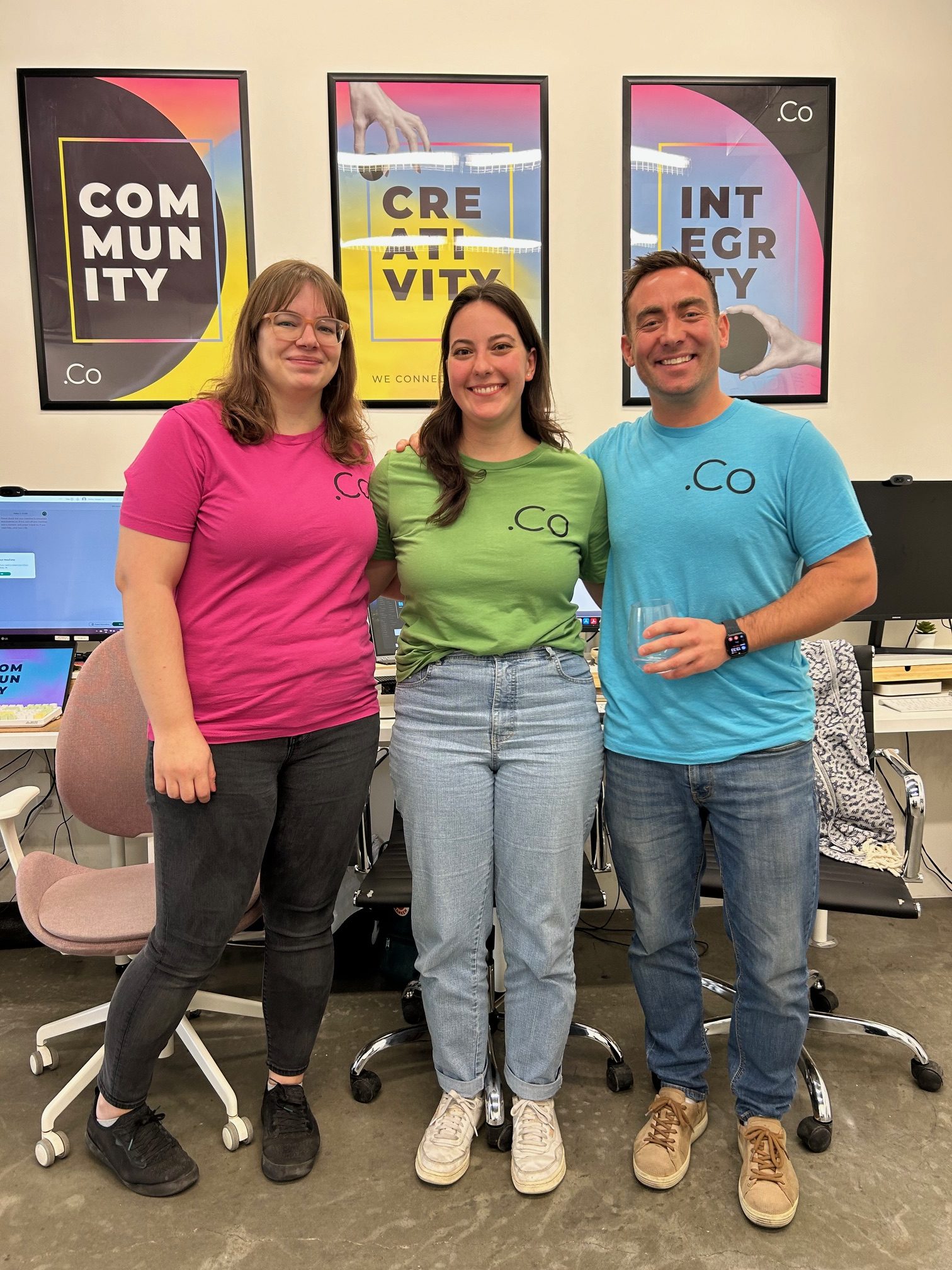
Creative Others Collective Inc. Handling everything from brand design to building physical and digital elements, they’ve worked with some of Canada’s best known brands. With a knack for outside-the-box thinking and installations, they’re making their mark on our city’s creative landscape. Please enjoy our conversation below.
What’s the story behind Creative Others Collective Inc.?
I moved here five years ago as an Architect but found myself drawn to ideation and creativity through many mediums such as, branding, web design and strategy, and physical design and fabrication. It was exciting to explore outside of Architecture. My journey took me through a role as a marketing manager for a restaurant chain in Ireland, which I continued remotely after relocating. Here in Vancouver, I took on a project for Translink at the PNE, which opened doors to more opportunities. During one project, the client attributed all the work to me which didn’t sit well with me. In reality it was a collaborative effort and I wanted everyone to feel equally accredited. That’s how “Creative Troy” evolved into “Creative Others.” Around the same time, I reflected on my core values and landed on community, creativity, and integrity and built Creative Others rooted in those principles. I’ve since surrounded myself with people who share these values, and together, we’ve thrived.
Why did you choose Strathcona?
The affordability was a major factor. MakerLabs offered reasonably priced studio space and access to tools, which made it an ideal starting point. I previously had a desk downtown, but it lacked soul. The dream was always to have a street-facing retail space to connect more closely with the community. So we’re delighted with our new studio.
What are some of the high points of being here in Strathcona?
- Katie: I love the area. There’s a vibrant mix of businesses like breweries and plenty of collaboration opportunities. MakerLabs nearby has been a fantastic resource, enabling us to collaborate with talented people.
- Ashley: We’ve been here for three years. Starting at MakerLabs and transitioning to our current space has been seamless. I enjoy being able to walk between our workshop and office with ease.
- Troy: Strathcona feels like a small town right next to downtown. The community of local businesses makes collaboration easy, and the food scene here is great too.
What challenges do you face in the neighbourhood?
The open drug use, alcohol abuse, and occasional violence are significant issues. We’ve had to call the police for violent incidents, and one of our team members was recently chased, which was very unsettling. As a result, we often escort each other when moving around the area. While we’d love to create community-focused window displays or collaborate with art schools, the current environment makes it difficult to pursue such initiatives as we have to keep our street facing studio low profile so as not to attract unwanted attention.
What challenges do you face running your business?
Rising costs are a primary concern. We can only increase our rates so much before pricing ourselves out of projects. Competing with businesses that leverage cheaper labor abroad or use alternative methods adds to the difficulty. While we aim to maintain fair margins, it’s becoming increasingly challenging to balance costs and value.
Do you feel like you’re part of the ecosystem?
Yes, though there’s room for improvement. We are part of the Strathcona community but often discover businesses we didn’t know existed. A more comprehensive directory could help foster stronger connections.
What are your thoughts on zoning policies in Strathcona?
We understand the need for more residential spaces in the city, but proper planning is crucial. It’s possible to integrate high-density residential buildings with industrial areas like ours, but the streets must be improved to attract residents.
What are the advantages of operating in a light industrial mixed-use area like Strathcona?
Our work relies on access to industrial resources like MakerLabs for building and fabrication. The collaborative atmosphere here is invaluable, allowing us to work with skilled professionals and learn from other businesses.
What initiatives would you like to see from the BIA?
A structured monthly meetup for businesses to connect and support one another would be fantastic. Additionally, an app-based directory with robust tagging and categorization would make finding and collaborating with other businesses much easier.

Meet the Maker: Clubcard
No print job is too small for this Strathcona commercial print shop.
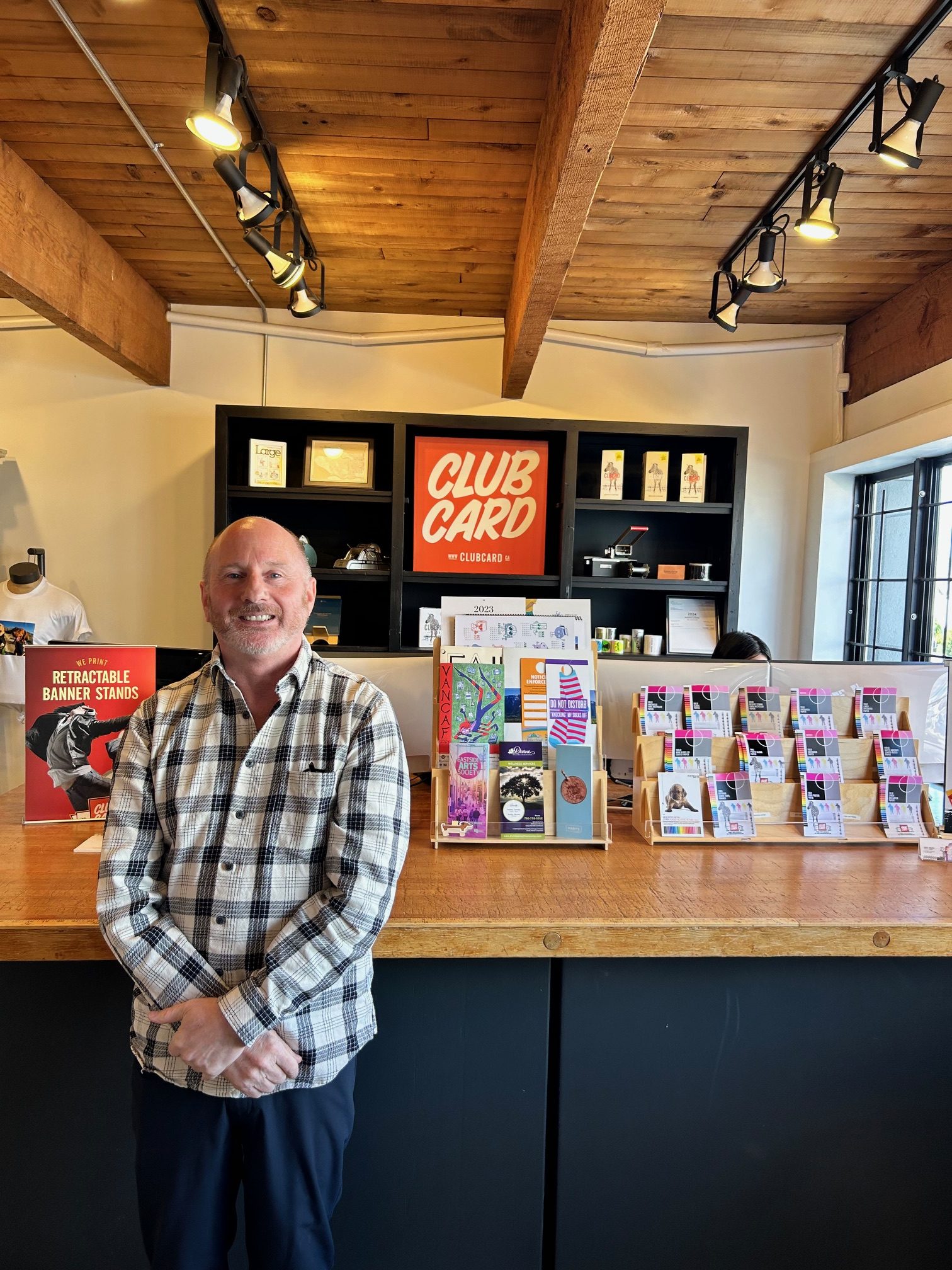
Clubcard. They’ve been around for 30 years, and in Strathcona for six. They’ve faced a global paper shortage, rising rents, four moves, and still show no signs of slowing down. This resilience is palpable when you talk to Mike. So is the delight of owning a business in Vancouver. During our conversation, he spoke so joyfully about everything. From the high-output printers at Clubcard, to the old-style houses in Strathcona (he really loves those), his passion for his business and the community is always front and centre. Have a read and see for yourself.
How did Clubcard come about?
So my business partner and I worked at the courthouse, and we decided we wanted to start a business. Now this was 1994, so it might sound weird, but back then, everybody needed a physically printed resume, and we realized that we could do that for people. So we bought this really fancy laser printer. It was small, but super high-end. We also got a fax machine and a cell phone, and we put up posters that said we printed resumes for a fee. I can’t remember what the price was, but it was really inexpensive. So we would literally go and meet people at a coffee shop. I would sit down and take notes of what they needed for their resume, and Mike would lay it out on our 386 PC computer, and we would create resumes for people. So we charged a fee for the resume setup, but the big thing was printing it on really good paper with a nice laser printer. We would charge for that and also charge to fax, since most people didn’t have internet then.
In the building we were in, we met one of our neighbours in the elevator, and he asked us what we did. We said graphic design, because we didn’t want to say we just created resumes. He goes “I’m making a movie and I need a book to take to this thing I’m attending in Italy” and we said yes, even though we were completely way over our heads. So we got the job, but we had to take shifts because the computer was so slow. We had to scan all of the images and import them, which took forever, and every time you changed something, this computer would be like, “stop, you’re killing me”. So that was our first job, and we apparently loved misery, so we kept doing it. Then we eventually got into a studio space and started hiring and expanded.
Do you feel like you’re a part of the ecosystem here?
Yeah, I think I do. We’ve been around for 30 years, six years in Strathcona, and we absolutely love it here. We started off in Yaletown when it was pretty hip, and suddenly everybody and their startup wanted to be there, so the rents went through the roof. Then we moved into our first storefront location on Burrard, and moved two more times until we moved here. It has been really good because Low Tide, the landlord, is great. The neighbourhood is a good mix of residential, light industrial and production, food spots, retail and art galleries. It has a lot of creative outlets, which means we’re around small businesses, artists and entrepreneurs, which fits our business model perfectly.
In your opinion, what are the advantages of operating in a light industrial mixed-use space:
Firstly, there’s a monetary advantage to it with a lower tax rate, but more importantly, it means you’re around like-minded businesses. We have a lot of clients that manufacture and make their own goods, and these tend to be the perfect size for us to service because they’re usually looking for smaller runs of printed materials and it’s just a really good fit. A lot of what we do is typically for smaller clients, anything from a single piece of fine art print to around five to ten thousand pieces. We can do larger but the smaller orders is our niche.
How attractive do you find Strathcona for new investment or a business expansion?
I think this is a perfect place for anybody to grow. I really do hope there’s some good low-rise-ish mixed use, so that you have that residential that’s so badly needed, plus commercial and light industrial. For example, the building on the next street has residential, commercial and retail, and then in the alley it’s got light industrial. It’s exactly what we need in the area because it brings you people and businesses, and everything fits into the ecosystem here.

What are some of the challenges that you’ve faced as a business?
Our biggest challenge since COVID is with the paper supply chain. It’s probably one of the things people don’t think about. We need high-quality paper and it’s specifically made for the type of printing that we do. That means a paper mill has to create it and think that there’s a good enough market for it to choose to keep making our paper instead of something else. When COVID hit, paper mills changed to making packaging for take-out food, items for hygiene, and face masks, so all that worldwide resource for pulp was redirected. A lot of those paper mills haven’t resumed making paper for printing, so we’ve actually lost a lot of the papers we used to have. Sadly, a lot of the Canadian paper mills are gone, and now our paper either comes from the States or Japan. That’s the biggest challenge, that our paper prices have increased easily 50% since COVID, and sometimes more.
What do you think is the economic potential of Strathcona?
I think in 10 to 20 years, you’ll see this being a really vibrant mixed-use corridor. There’s so much traffic and potential along here. I love the beautiful old houses and don’t want to see them go away, but I also know that there’s got to be more housing. Some of these can only support maybe two families. So, a good mix of high, mid-rise and townhouses with residential over commercial would be really good.
What are your thoughts on municipal policies around zoning?
One of the reasons we moved here was because we learned our lesson from the first time we signed a lease. There were things we didn’t know we couldn’t do in certain places. Luckily, this place was pre-approved for printing and publishing. I think if the City was to put together a much larger blanket list of what is approved for each zone, that could be a lot simpler. It’s really daunting, especially for somebody starting a new business. I mean, I know why they have rules and regulations, it’s for safety. I just think that sometimes the City forgets that we don’t look at the rules, regulations, bylaws and zoning all day long. And if there was a way to explain to somebody, here’s how you would open a business here in this space, that would be a lot simpler.
What does the future look like for Clubcard?
In the next year, we want to open a studio in Palm Springs. Right now, we just have an office there. We’ve always had a US office and used to have one in San Francisco, but the rent got crazy high so we moved to Palm Springs. It won’t be like this space because it’s a huge investment to get all this equipment and staffing. It’s a big commitment and we don’t want to hire people and say, “oh, sorry. It didn’t work out”. We really want to make sure that we’re doing right by the people that work with us. So we’re imagining a studio that’s similar to the front of our shop here, where you can drop in, see samples, and talk to us about what you want to do. We also just signed a new lease here so we’re planning to stay and just keep growing. We’re always investing in new equipment and expanding what we’re able to offer, especially considering most of our clientele. It’s smaller orders and we want to be able to do those quickly, and produce really high-quality work.
What would you like to see from the Strathcona BIA?
You’ve got the security program and all the other programs, so I can’t think of anything in particular. It’s been a really positive experience here.
Visit Clubcard at 868 E Cordova street Monday to Friday from 8-5pm.
Follow them on Instagram and head over to the website for all your print needs.

Meet the Maker: Focacciaza
It’s a taste of Italy in Strathcona, and Italians agree.
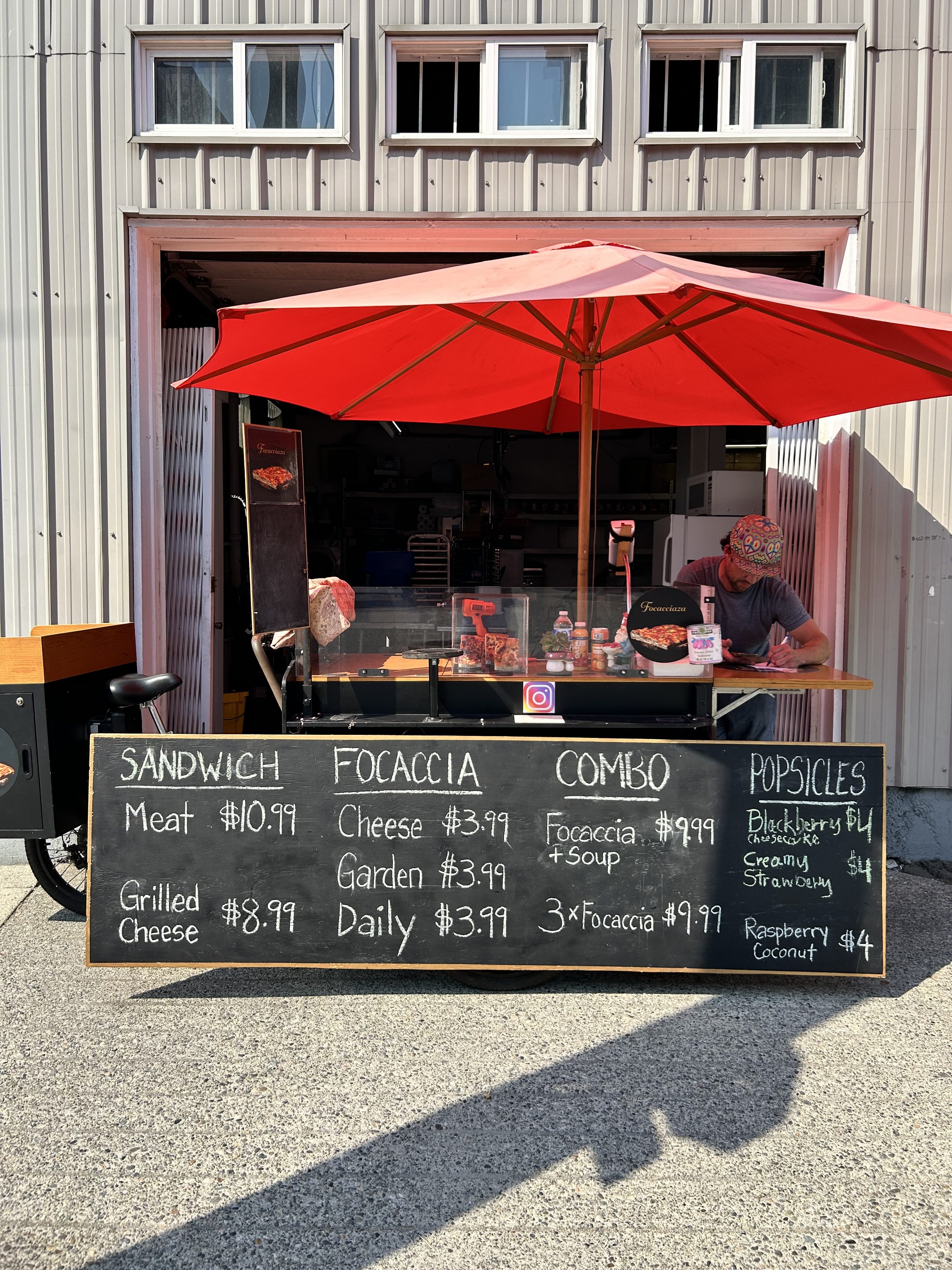
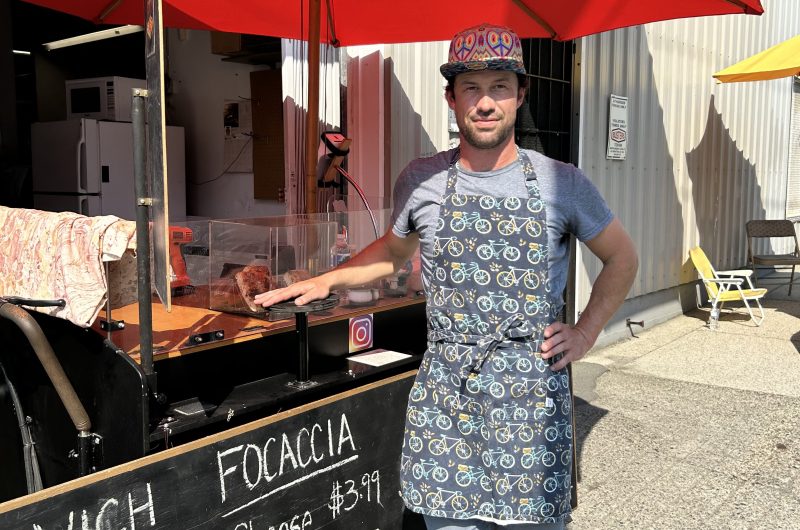
Focacciaza on East Cordova and Raymur. You cannot miss the red awning and bicycle-cart set up, out of which Joe dispenses what is the best focaccia I’ve ever tasted. This is confirmed by a neighbouring business owner who walks by during our conversation and raves about how amazing Joe’s food is. Did I mention that this neighbour is Italian? That’s all the validation he needs. Focacciaza Joe (as everyone calls him) is passionate, dedicated and easy going. Leading the sustainable food-business movement, he forages for wild mushrooms and grows his own herbs, all of which go on the focaccia he sells from a zero-emission cart. Our conversation is a peek into his heart for small businesses and the Strathcona community.
What’s the story behind Focacciaza?
So before I became a cook, I was backpacking through Italy with a friend, and a travel agent advised us on where tourists don’t go. They sent us to La Spezia which is in Genoa, where the most famous focaccia variety comes from. It’s a thick, soft, fluffy type. We went into this small village and couldn’t find anywhere to stay, so we slept in a field. The next morning, we were really hungry and we walked by a little focacceria and we could smell the food. So we got them to sell us a fresh piece of focaccia for like two euros and it was the most amazing focaccia. So that’s what mine is modelled after. I have this memory of that focaccia and I designed my recipe by myself, so it’s not a recipe that I got anywhere. Instead it’s made to suit my timing, my baking and my surroundings, but the goal is basically to have that texture and flavour. Italians from that area that try my focaccia always validate it. They always say “It’s just like home”.
What’s the best part of running a business in Strathcona? Any high points?
Absolutely! I get to make unique food with ingredients that I grow and forage in the wild, which is rewarding in itself. I have a community garden plot in the Strathcona Cottonwood Garden and those herbs go into my focaccia. People love all those things. Everybody in the community likes me. Every car that drives by waves. There are many upsides to running your own business. There are many challenges but it’s rewarding work, right? I do feel like I’m a part of the community. That’s why Strathcona is really good. It has a very community vibe. There are a lot of artists that live here that have a little bit of time to go seek local things. Also the zoning, and the fact that Downtown and Commercial Drive are a quick drive away are some of the upsides.
What is the most pressing issue you face being in this area?
I’d say, visibility. This building used to open up on Powell street and was quite visible to the public, but more and more it’s being blocked off. Now with the overpass, you can’t even see us. This Fall, Transport Canada is going to close off a section of Raymur street here because of rail safety. So there will be no vehicle or foot traffic and that closes me off even more. Even if you want to buy something from me, it becomes harder and harder. A while ago, I had an interview on CBC radio, and it did drive business and brought some people from different places, but every one of them said Focacciaza was almost impossible to find because they couldn’t turn off of Clark, Hastings or Powell street to get here, and when they finally got onto Cordova, they were stuck behind the train.

What are your thoughts on the zoning policies in this neighbourhood?
The zoning is really good. It’s mixed zoning in this area. This building is old-fashioned, an old vinegar factory that’s now been zoned for mixed-usage and it’s perfect. You can do a lot of different things here and that’s very beneficial not just to someone looking for a home for their business. There’s also a diverse range of small businesses around me and they’re willing to support food makers like me. Really if I could live here, I would.
What’s your vision for the future of Focacciaza?
I have a lot of dreams for my business, like teaching people, setting up workshops, and hosting events. I also play in a band so I can make the music for these settings. I try to be a part of the cultural community, which could always use help in Vancouver and the zoning here might allow for that kind of mixed-use space to happen one day. I see Focacciaza being a really cool community place where people can not only purchase local things, but enjoy local culture and music, all in one place.
What are some of the challenges you face running a street-food business?
I’m a street food vendor and I find it impossible to sell on the streets of Vancouver. I’m not allowed to be downtown or on the beach. I’m not allowed to be in any Vancouver park. I can’t be on the entire seawall or Trout Lake. Just imagine anywhere that you could see this bike. It has to do with my licence and the City of Vancouver, and this is why I just stay here. So it basically treats me like a food truck and that’s that. I need to figure out how people can get my product, but approaching a grocery store would mean packaging, labelling, and barcode scanning. And it’s hard for these small businesses because you need a designer. These things are not cheap. At the end of the day I am surviving as a business on this corner and making all kinds of things besides the focaccia like sandwiches, soups, biscotti, and popsicles during the summer. Catering gigs really help me out because there’s only so many people that live and work around here. Once it’s 5pm, there’s not a soul walking down the streets. One solution for me would be to find an investor and move into a brick-and-mortar or completely change to catering but that needs investment as well.
Finally, what kind of support would you want to see from the SBIA?
It would be some kind of program helping businesses with their marketing, which is what you’re doing right now. Because small businesses exist but can’t be found. People are bombarded by so much marketing these days that it’s really hard for any small business to put those dollars into noticeable marketing. The BIA could also host local Strathcona festivals with all the small businesses and market it. That’s how local people get to know their local businesses a little better. Overall, any opportunities to actually sell my product would be great.
Visit Joe at 1007 E Cordova street Tuesday to Friday from 11-5pm.
Follow his Instagram to see what’s on the menu and check out the website to book Focacciaza for your next event.

Spotlight on Food Cluster Development in Strathcona
What It Takes to Build a Thriving Food Economy
The Strathcona Business Improvement Association in collaboration with Dunefield and other local stakeholders, are championing an initiative that explores the potential opportunities and barriers of further developing a food business cluster in Strathcona. This project aligns closely with the goals of the Strathcona BIA’s Economic Vision and Implementation Plan developed in 2023, combining the plan’s focus areas of industrial lands, retail spaces, and community engagement. An economic cluster in an urban industrial business district refers to a concentration of interconnected businesses in a particular industry, ranging from manufacturers and suppliers, to service providers, retailers, and institutions. Further developing a business cluster can help lead to increased innovation, productivity, and competitiveness among the businesses within the cluster, driving economic growth, attracting investment, creating jobs and fostering collaboration within the local economy.
Focusing on the district’s food cluster was a natural choice for this economic development initiative. There is already a strong presence of food businesses in Strathcona, spanning from manufacturing, logistics, product innovation, unique restaurants, and cultural foods, showcasing all kinds of specialized food and beverage skills. This cluster includes both industrial and retail businesses, leveraging our district’s unique blend of industrial and retail zoning and proximity to residential. Many of the challenges faced by food businesses are macro-level challenges. Looking at how to address these shared challenges within the food cluster will not only benefit food businesses but also other business sectors in the area. In particular, a strategic effort to maintain the neighbourhood’s capacity to support both production and manufacturing as well as sales is crucial for retaining a competitive edge for businesses here.
The early stages of this project have focused on engaging and interviewing food businesses in the area to uncover the key barriers and challenges businesses have been experiencing. This project aims to help connect the dots about how collaborative approaches could address some of these common challenges and capitalize on opportunities. The following interview with project leads Wilco van Bemmel and Vincent Kwan dives deeper into the exciting work of this project. Read on to learn more about the significance of establishing a stronger food cluster in Strathcona and discover some of the early findings and recommendations.

What are the key characteristics of a successful food cluster?
There are a few key aspects, and some of these are present here in Strathcona, which is good news. The first key thing is what we’re calling the ability to make and sell. Businesses need to have the ability to both create and innovate food products, as well as test them in the market. That includes getting immediate feedback from wholesalers, stockists, or customers. Which leads to the importance of the proximity to employees and residents. The cluster should be located near both employees and residents to facilitate easy access and interaction. A strength that Strathcona uniquely offers.
From our engagement in the community, businesses have shown us that for them to thrive here they need to develop a diverse business model. For example, including elements of wholesale, retail, and product innovation, or even just being smart in utilizing your space, such as allowing other businesses to use space during off-hours can be important. Only relying on foot traffic is often not enough. Another important factor is stability in land use and lease rates, which is essential for businesses to have the confidence to invest in their operations and logistics for the long term. If people feel like they don’t have any certainty of what the future is going to look like, it can deter investment and growth.
What kinds of support or policy should we expect a municipal government to have in place for the healthy development of this kind of cluster?
One thing that is really threatening these kinds of businesses is the way we have defined “highest and best use” for properties and land. In practice, the types of light industrial businesses where people make and sell things are not the kind of use that can generate the highest property values and taxes. In the current system they’ll often be the second pick for a landlord, especially considering barriers around required tenant improvements and the length of time to get permits. What if we shifted the conversation on the highest and best use being where people actually make healthy, nutritious, and culturally interesting foods that the local community desires and can afford? Then we can start to look at policy and incentives aimed towards making sure that is actually possible. At the moment, it’s not a level playing field. The businesses that have a connection to the local neighbourhood, that want to hire locally, be good neighbours, source their materials or ingredients locally, and want to add value to the communities, are often the businesses having the hardest time to make it work in terms of upfront investment required and length of time to get their permits. So this is an important area to look at in terms of where the government can step in with incentives.
What are some other pressing issues facing food-related businesses right now?
One thing to keep in mind is that a lot of challenges that food businesses face are macro-challenges as well. Many businesses are still dealing with the impacts of COVID and are still recovering. The pandemic really demonstrated the argument for having a diverse business model, because it’s these businesses that had some built-in resiliency and could more easily pivot to new opportunities. There is a big concern about the loss of industrial land and also the quality of remaining or new industrial spaces. If spaces are replaced by something that on paper is still industrial but in practice is supposed to be quiet and tidy, then it loses that true industrial use. We also heard from businesses that city-permitting is taking a very long time. The whole process can feel very uncertain, a bit like a black box. Another challenge we’ve identified is the difficulty of scaling. For example, scaling up from a small-scale commissary kitchen space to your first retail front is challenging and expensive. There is a big need for smaller stepping stones and support mechanisms in scaling and growing businesses. There is a lot of food that is produced in Strathcona by talented people, but you cannot always enjoy it here – it has no outlet. It highlights the potential for more opportunities for businesses to develop, incubate, and test their products locally before expanding to other communities, without having to take too much of a risk.

What are some of the potential economic impacts of developing an even stronger food cluster in Strathcona? Why is this work important?
Food businesses have a high percentage of economic spin-off that stays within the vicinity of the community compared to other business sectors. This is evident in the sourcing of ingredients, packaging, staffing, and menu items, all of which contribute to the local economy. Some of the practical reasons for the local economic impact are cost-effectiveness and logistical advantages such as ensuring product freshness. For example, sourcing locally reduces financial risks associated with sourcing from distant locations. So there is something intrinsic in food businesses that make them have a local footprint. Which is great, because if we want to build strength as a cluster, that’s exactly what you want to see. When businesses are actively seeking opportunities to collaborate and source locally this enhances the return on investment in the food cluster.
Food as a sector is an important one because it serves all categories of end-users in the economy, including residents, workers, and visitors. While sectors like high tech and green technology often receive a lot of attention, the food cluster is essential due to its direct impact on a wide array of end-users. Especially given the City’s current interest in supporting small businesses, it makes a lot of sense to prioritize the food cluster in local economic development strategies. This should include setting industrial land targets to preserve and support the sector.
A big consideration is what is the role of different stakeholders within the ecosystem? We are actively asking ourselves what is the role of government, community entities, and then of course BIAs in filling those current gaps in economic support, and how can BIAs be empowered more to play a stronger role in filling those gaps. Focusing on the food cluster work helps expose a lot of those opportunities.
What are some of the early findings and recommendations for creating a supportive ecosystem for food businesses in the neighbourhood?
Firstly, we should engage in a debate with the city about the highest and best use for the area, ensuring that the types of food businesses we actually want have a fair chance to thrive here. Discussions with the city should also include long-term things like land-use and zoning. In the shorter-term, we should be thinking about the relaxation of rules. This could involve challenging rules and processes that make it difficult to experiment and innovate. For example, could we streamline the process for someone with a successful commissary kitchen product to transition to a retail setting, by identifying a suitable location and obtaining necessary permits within one month. We should be encouraging pilots that push some of these existing boundaries, and involve multiple stakeholders, like landlords and banks, for support and funding opportunities.
We have also heard that businesses have a hard time connecting to innovation. Many feel like existing support programs are geared toward larger companies, and so there’s a lot of potential in providing support for small businesses here to connect with innovation so they can implement it into their processes. The connection to education is another area to explore. It seems like there is a lot of potential in helping bridge the gap between businesses and educational institutions that are addressing topics like food security and food systems.
Finally, there is a large need to address the high costs of running a food related business, whether that be startup costs, operational expenses, or scaling. The lack of coordination between government and other stakeholders is inevitably leading to inefficiencies and higher costs. A more structured approach to incentivize collaboration and improve coordination is needed to support businesses more effectively.
What role do you see technology and innovation playing in the development of a food business cluster?
Quite a few businesses are very interested in the connection between food and health. There are businesses out there challenging the way we think about the ingredients in our foods. I think we’ll see innovation around plant-based foods, customer education, and changing people’s food habits towards more healthy foods. Another interesting area is the production process itself. We’re seeing a focus on making the production process more sustainable and circular, even on a smaller scale by sharing waste streams and resources within the community, with interesting opportunities for technology there. When thinking about the stepping stones required for scaling, the connection between digital and physical space will also be really interesting. In what ways can businesses build a customer base even without having a physical presence yet, or use digital as a way of connecting with suppliers and bring down the costs of starting your business? The connection between digital and physical will be an interesting angle for more businesses to be experimenting with.
Connecting the Dots and Creating Opportunities
Part of the aim of this project is to identify gaps and make meaningful connections within the food business cluster ecosystem in Strathcona. By helping articulate gaps and connecting dots the Strathcona BIA can work with stakeholders to understand the actionable steps needed to further develop a strong food cluster in Strathcona. Acting as a nimble connector, the SBIA strives to facilitate collaboration with key players and government to drive new initiatives and policy changes that will benefit the food business sector. Together, we can build a thriving and sustainable food business cluster in Strathcona, leading the way for innovation and economic development.
Next Steps
One concrete next step is that we will be supporting food talent in Strathcona towards a food retail (pop-up) presence. We want food entrepreneurs who today work in commissary kitchens and small production spaces, to have a low-risk, affordable way to reach a new customer base and test their readiness for a permanent retail space. We hope this will create new food options that Strathcona residents and workers need and crave, like fresh greengrocers, more lunch options, a greater variety of local and cultural foods, and food experiences in the late afternoons.
We recently interviewed some exciting Strathcona businesses as part of our focus on the local food economy.
Learn more about Tommy’s Whole Grain Bakery, a new bakery in the district committed to redefining baking with whole grains here.
Dive into the world of shared kitchen spaces in this interview with B3 Collective Commissary Kitchen here.